
What qualities were most important behind Arjuna being called "Narottama" in the Mahabharata
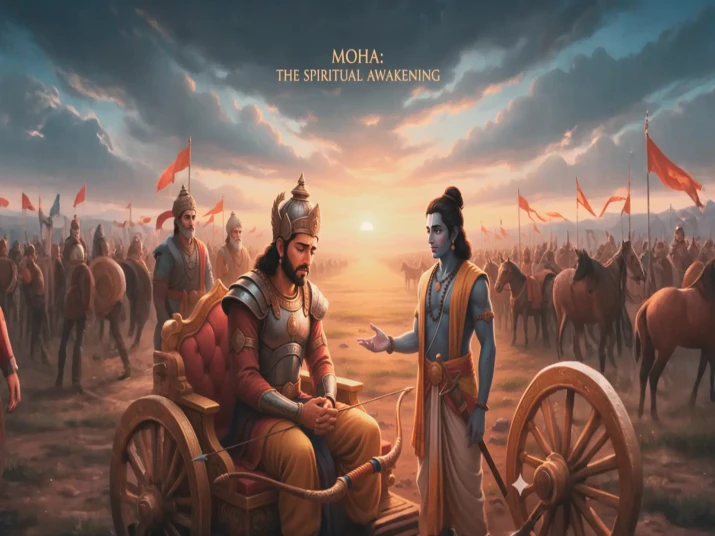
Table of Contents
- What qualities were most important behind Arjuna being called "Narottama" in the Mahabharata?
- How does Arjuna's delusion in the Kurukshetra War pave the way for spiritual awakening?
- How is the concept of ‘Karma Yoga’ of the Gita reflected in Arjuna’s behavior?
- To what extent did Arjuna understand the concept of soul, duty, and morality?
- Would Arjuna have ever reached spiritual heights without the advice of Krishna?
- Is Arjuna's life a kind of path of sadhana?
- How does Arjuna's role in Draupadi's swayambhara change the course of the Mahabharata?
- How did Dronacharya's influence on Arjuna's archery education play a role in shaping his character?
- In what ways is the rivalry between Arjuna and Karna a source of central tension in the Mahabharata?
- Why was Arjuna hesitant or depressed in the Kurukshetra War?
- What argument does Krishna give to dispel the disillusionment of the distraught Arjun?
- How is Arjuna's conflict between religion, duty, and morality relevant in today's society?
- How can the teachings of the Gita be interpreted as spiritual guidance that changed Arjuna's life?
- Which of Arjuna's main weapons and tactics set him apart from all other warriors?
- Would Arjuna have been victorious in Kurukshetra without Krishna?
- How does the incident of receiving the Gandharvastra and the Gandiva bow from Agnidev change Arjuna's fighting power?
- Which three qualities of Arjun as a leader are worth following for today's youth?
- Is Arjuna's role among the Pandavas just that of a warrior, or is he also important from a strategic perspective?
- Who was more morally courageous between Arjuna and Karna?
- What similarities can be found between Arjun and any army officer or commander in today's era?
- Is Arjuna's dilemma relevant in the current world's moral crises, such as war, politics, and family-based conflicts?
- What aspects of discipline, perseverance, and concentration can today's youth learn from Arjuna?
- How can the idea that Arjuna is often called a symbol of the human soul be explained?
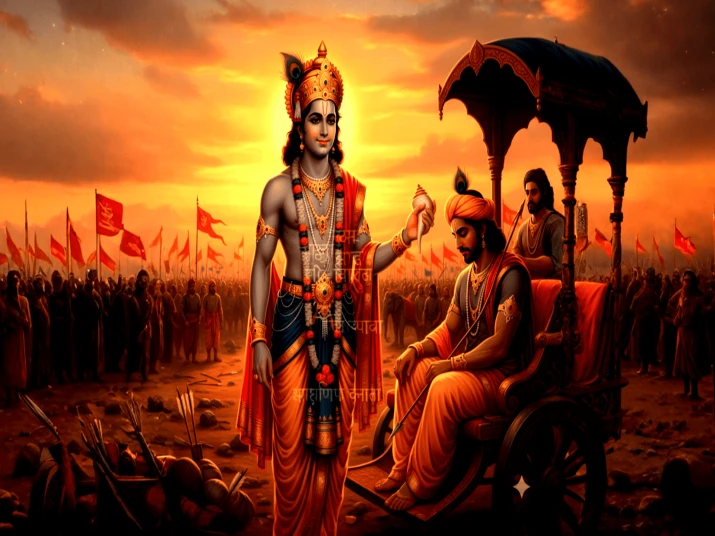
- Is the chariot journey of Krishna and Arjuna a symbol of guidance in life?
- From Religious Crisis to War Crisis: Similarities between the Mental State of Arjuna and the Modern Soldier?
- Is the crisis of indecision seen among political leaders similar to Arjuna's dilemma?
- How does the importance of Arjuna's rigorous practice relate to competitive preparation in today's era?
What qualities were most important behind Arjuna being called "Narottama" in the Mahabharata?
In the Mahabharata, Arjuna is called “Narottama” because of his extraordinary qualities. He was not only a great warrior. Rather, he was a perfect example of an ideal human being. The main qualities that were revealed in him set him apart from other characters.
Arjuna was extraordinarily patient and strong-willed. He worked with a steady mind, even on the battlefield or in critical situations. Due to this, he was seen as reliable and strong in any difficult situation.
Arjuna’s skills and efficiency were unique. He was an expert in archery and was perfect in war tactics. His ability to distinguish targets and strategic intelligence made him invincible in war.
Arjuna was a symbol of morality and piety. He always fought for justice and religion and lived within the bounds of morality in life and decisions. From Krishna’s dialogue with him in the Bhagavad Gita, it is understood that Arjuna was deeply focused on understanding the deep truths of God, the soul, and life.
Arjuna set an example of honesty, loyalty, and self-control. His devotion to his family and friends and his ability to control his emotions established him as an ideal human being.
Arjuna is called “Narottama” because of his qualities of patience, skill, morality, knowledge, honesty, and self-control. He is not only a great warrior, but also a shining symbol of the ideal human being. All these qualities have given him a special status as the hero of the Mahabharata.
How does Arjuna's delusion in the Kurukshetra War pave the way for spiritual awakening?
Arjuna's 'delusion' during the Kurukshetra War is actually seen as an important step in spiritual awakening. Delusion refers to inner conflict and confusion about one's own authority, relationships, and responsibilities. Arjuna was faced with a deep psychological and moral conflict when he had to fight against his family and elders in the war.
At this moment, Arjun realises that it is not possible to stay on the path of justice and religion by acting only based on personal emotions and relationships. This 'delusion' leads him to the deep truth of his heart through self-examination. In the Bhagavad Gita, Krishna teaches him that a person should be devoted to his responsibilities and duties, and should not be infatuated with results or personal attractions.
This confusion and emotional crisis of Arjuna gives him the opportunity to gain knowledge of truth, karma yoga, and the path of Dharma. His 'delusion' shows him the path to connect with the inner self, transcending the physical and mental perspectives and attaining spiritual realisation. In simple terms, Arjuna's 'delusion' helps him understand the limits of his emotions and human weaknesses and leads him towards knowledge and religious consciousness.
In short, Arjuna's 'delusion' in Kurukshetra was the first step towards spiritual awakening. He breaks the bonds of personal emotions and finds guidance in the direction of his inner truth and duty. This shows how human weaknesses can sometimes pave the way for spiritual excellence.
How is the concept of ‘Karma Yoga’ of the Gita reflected in Arjuna’s behavior?
The concept of ‘Karma Yoga’ of the Gita is clearly reflected in Arjuna’s behavior, especially during the Kurukshetra war. Karma Yoga is not primarily a matter of fruition. Rather, it is a view of doing work centered on duty and responsibility. Where a person focuses on performing his work properly, but is not bound by the delusion of personal gain or loss.
Before the war, Arjuna was in deep conflict and ‘delusion’. He could not fight against his relatives and friends. But under the advice of Krishna, Arjuna understands that his duty, fighting for the Pandavas, is a symbol of religion and justice. He learns that doing the work is the main thing, not worrying about the results.
This is where the Karma Yoga of the Gita is reflected in his behavior. Arjun is able to fulfill his duty by defeating his emotions and fears. He does not hold back because of personal regrets or relationships. Rather, he acts with self-control for justice and duty. His goal is specific and responsible; War is his duty, and he leaves the results of his actions in the hands of God.
Therefore, Karma Yoga is seen in Arjuna's behavior as devotion to duty, freedom from emotions and consequences, and perfect performance of work through self-control. This shows how the philosophy of the Gita is not just theoretical, but is applicable in real life as a moral and spiritual practice.
To what extent did Arjuna understand the concept of soul, duty, and morality?
In the case of Arjuna, the concept of soul, duty, and morality is deeply revealed through the events of Kurukshetra and the teachings of the Bhagavad Gita. Before the war, Arjuna was bound by emotions. He was feeling the fear and conflict of fighting against his relatives and gurus. But Krishna's advice helps him understand the eternal nature of the soul, human duty, and the right direction of morality.
Soul: Krishna convinces Arjuna that the soul is immortal and indestructible. Even if the body is destroyed, the soul is not destroyed. Arjuna understands this theory and understands that human death is only the death of the body; there is no harm to the soul. In this, he is freed from the fear of death and the bondage of emotions.
Duty: Arjuna is made to understand that a person should be steadfast in performing his duty (dharma). Attachment to results or personal emotions can never determine the path of duty. Arjuna takes his stand in this view and resolves to fight on the path of justice and righteousness.
Morality: Arjuna learns to understand the boundary between justice and righteousness. Instead of making wrong decisions due to emotions and personal desires, he learns to act based on morality and righteousness. In this, he understands that a truly moral life is through responsibility, duty, and following spiritual knowledge.
Arjuna was able to gain a deep understanding of the eternity of the soul, devotion to duty, and the importance of a moral life. In these three dimensions. This understanding established him not only as a great warrior but also as an ideal human being and a moral personality.
Would Arjuna have ever reached spiritual heights without the advice of Krishna?
Arjuna would probably not have reached spiritual heights so easily without the advice of Krishna. Although Arjuna himself was a great warrior and a moral man, before the Battle of Kurukshetra, he was bound by conflict, fear, and emotions. The burden of fighting against his own relatives, the fear of death, and personal remorse made him confused. In that situation, it was very difficult to find the right direction of his inner truth and duty.
It was Krishna's advice that was able to give Arjun a deep understanding of the eternity of the soul, devotion to work, and morality. Krishna did not just give theoretical knowledge. Rather, he showed Arjun how to apply it in real situations. For example, Krishna taught him that acting on the path of duty is the main thing, not worrying about the results. This is the core teaching of Karma Yoga in the Gita. Furthermore, Krishna helps Arjuna to get rid of his passions and regrets and to attain spiritual knowledge and mindfulness.
Therefore, even though Arjuna had his own merits, he might not have reached his full spiritual awakening and elevation without Krishna's guidance and advice. Krishna's initiation elevated Arjuna from a mere warrior to a wise and moral man.
Is Arjuna's life a kind of path of sadhana?
Yes, Arjuna's life can be seen as a kind of path of sadhana. In the Mahabharata, his life is not limited to war and moral conflict. Rather, it is a continuous process of action, meditation, self-control and acquiring spiritual knowledge.
First, Arjuna's life indicates that sadhana does not mean only religious or penance. Rather, performing daily duties and social responsibilities is also a part of spiritual sadhana. During the Kurukshetra war, he learned to deal with his emotions, fears and the temptations of relationships. Here, his "delusions" and conflicts led him to the path of self-awakening, which is the main purpose of sadhana.
Second, the concept of karma yoga is clearly reflected in Arjuna's life. He used to act as per the instructions of Shri Krishna. But he did not pay attention to the results. Being devoted to one's duty and letting go of emotional attachments is a high level of spiritual sadhana.
Third, Arjuna's life teaches that sadhana means understanding the eternal nature of the soul and remaining steadfast on the path of moral life. Through the Bhagavad Gita, he understands the soul, morality, duty and the knowledge of God. This knowledge is applied in every decision and action he makes.
In short, Arjuna's life is a path of meditative and action-oriented pursuit, combining battlefields, moral conflicts and spiritual teachings. He shows that real-life obstacles, emotions and responsibilities can also be accepted as part of spiritual growth. This proves that Arjuna is not just a great warrior. Rather, he is a symbol of overcoming every situation in life through spiritual pursuit.
How does Arjuna's role in Draupadi's swayambhara change the course of the Mahabharata?
Arjuna's role in Draupadi's swayambhara marks a turning point in the course of the Mahabharata. During the swayambhara, Arjuna was the last to emerge victorious, displaying unparalleled archery skills among all the princes present as spectators and candidates. His victory was not just a personal achievement. Rather, it marked the beginning of an important event that strengthened the status and political position of the Pandavas.
First, Arjuna's skill in swayambhara established the political and social status of the Pandavas. By winning Draupadi, they established ties with the Kuru royal family, which later set the stage for the central conflict of the Mahabharata.
Second, Arjuna's fame and reputation increased greatly as a result of the swayambhara incident. He was not just a background hero, but established himself as an unforgettable hero in the eyes of the powerful royal families of the time. This reputation later forms the basis for the rescue of Draupadi, the Pandavas' stay in the fort, and the clash with the enemy.
Thirdly, the Swayambhar testifies to the morality, honesty, and justice in Arjuna. He fights fairly with others in the competition and wins Draupadi on the basis of merit alone. This introduces the main moral trends of the Mahabharata: religion, duty, and justice.
Arjuna's role in the Swayambhar is not just a personal victory. It serves as the beginning of the political, social, and moral conflict of the entire Mahabharata. It later sets the stage for the Kurukshetra War and the Pandavas' struggle.
How did Dronacharya's influence on Arjuna's archery education play a role in shaping his character?
Dronacharya's influence on Arjuna's archery education played a very important role in shaping his character and personality. Dronacharya was a perfect teacher and a tactical warrior, who not only taught weapons. But also taught discipline, concentration, and a sense of moral responsibility to his students.
Firstly, Arjuna acquired extraordinary skills under Dronacharya's education. His skills in archery and warfare reached a level where he became unique among other princes. This skill later played an important role in the Kurukshetra War and Draupadi's Swayambhara.
Secondly, Dronacharya taught Arjuna lessons in morale, patience, and self-control. His patience was acquired through the hard practice of archery and target discrimination. This not only develops physical skills but also mental stability. This gives Arjun the ability to make calm decisions in any critical situation.
Thirdly, Dronacharya emphasizes the importance of morality, honesty, and duty in his teachings. Arjuna learns that power should not be used for power alone, but for justice and duty. This teaching later guides him in the Kurukshetra battlefield to follow the path of religion and duty.
Therefore, Dronacharya's teachings did not just make Arjuna a skilled warrior. Rather, they shaped him into an ideal human being with morality, self-control, and a sense of responsibility. The teacher-student relationship and Dronacharya's guidance lay the foundation for Arjuna's character, which established him as the hero of the Mahabharata and the "Narottama".
In what ways is the rivalry between Arjuna and Karna a source of central tension in the Mahabharata?
The rivalry between Arjuna and Karna is one of the main sources of central tension in the Mahabharata. It is not only a reflection of personal enmity but also a symbol of moral, social, and political conflict.
First, personal rivalry: Karna and Arjuna are both skilled archers. Arjuna's victory in Draupadi's swayambhara and his subsequent conflict with Karna in the war intensify the personal rivalry between the two. This rivalry was not only a battle of skill, but also a battle of self-esteem and pride.
Second, moral and social conflict: Karna was a prince, but was not socially recognized due to his birth. And Arjuna was a symbol of moral and social status among the Pandavas. This difference affects the root of the conflict between them. The conflict between Arjuna's morality and sense of duty and Karna's self-esteem and sense of revenge creates the moral tension of the Mahabharata.
Third, political and strategic tension: Karna is the main force on the Kurud side, and Arjuna is the main warrior on the Pandavas' side. Their confrontation is not just personal, but a key situation that divides the two powerful sides and determines the outcome of the war. This symbolizes the central tension of the Kurukshetra War.
The final confrontation between Arjuna and Karna is a combination of personal skill, moral conflict, and political strategy. These three dimensions combine to create the central tension of the Mahabharata and add a dramatic dimension to the Battle of Kurukshetra.
Why was Arjuna hesitant or depressed in the Kurukshetra War?
The main reason for Arjuna's hesitation in the Kurukshetra War was moral. Here is a complex combination of family and spiritual conflicts. Before the war began, Arjuna was going to fight against his relatives, guru, and friends. This put him in deep emotional and mental conflict.
First, family and personal emotions. Arjun knew that if he started the war, he would harm his grandfather, father-in-law, teacher, and friends. The very thought of killing his relatives made him mentally weak and hesitant.
Second, moral conflict. Arjuna's morality was very strong. He understood that the war must be for the sake of religion, but at the same time, he was harming his own family. This conflict made him indecisive between justice and relationships.
Third, spiritual conflict. Arjun understood what the true meaning of death is, how the immortality of the soul works, and how one should fulfill one's duty. This spiritual quest and the need to control himself made him more hesitant.
In short, Arjuna's dilemma was a combination of family emotions, moral conflict, and spiritual quest. This dilemma made him focus on his inner truth and duty, and through the advice of Krishna, Arjuna finally reached spiritual and moral heights.
What argument does Krishna give to dispel the disillusionment of the distraught Arjun?
When Arjun hesitates to fight against his relatives and gurus in the Kurukshetra war, his delusion or emotion prevents him from acting. In this situation, Krishna motivates Arjun from a spiritual and moral perspective and presents some main arguments.
1. Immortality of the soul: Krishna says that even if the body is destroyed, the soul is immortal. Even if a person is sad about physical loss, there is no harm to the soul. This argument helps Arjun to free himself from the fear of death and the bondage of emotions.
2. Importance of duty and religion: Krishna explains that fulfilling a person's duty (dharma) is paramount. Personal emotions or attachment to results can never block the path of duty. Arjun has to fulfil his royal and moral duties.
3. Philosophy of Karma Yoga: Krishna says that one has to work, apart from the results; only devotion to duty can lead to spiritual progress. It teaches Arjuna that one should perform one's duty without being swayed by emotions.
4. The path of justice and righteousness: Krishna reminds Arjuna that war is for justice and righteousness. The goal is not to fight for immoral or selfish reasons, but to establish justice and defeat the enemy.
In short, Krishna's logic helps Arjuna break his "delusion". Understanding the immortality of the soul, being steadfast in duty, following Karma Yoga and maintaining righteousness. As a result of this teaching, Arjuna overcomes his hesitation and reaches spiritual and moral heights in Kurukshetra.
How is Arjuna's conflict between religion, duty, and morality relevant in today's society?
Arjuna's conflict between religion, duty, and morality is very relevant in today's society. The conflict that Arjuna faced during the Kurukshetra of the Mahabharata. The conflict between duty and justice with family, friends, and personal emotions. Similar challenges arise in our lives even today.
First, the conflict between professional and personal life. Today's people often find themselves in a dilemma between personal relationships with work or social responsibilities. For example, making a decision may harm someone, or there is a conflict between morality and self-interest. Arjun's situation teaches us that it is important to be consistent in making moral and religious decisions.
Second, the conflict between the stability of morality and social pressure. There is a lot of competition, temptation, and selfishness in society. Many times, we ignore moral values for immediate gains. Arjun's conflict reminds us that standing firm on the path of duty, justice, and honesty is important not only for the individual but also for society.
Third, the opportunity for self-awakening and personal growth. Arjuna's conflict helps him understand his inner truth, duty, and the nature of the soul. In today's society, too, the personal and social conflicts of man allow him to improve himself through criticism.
In summary, Arjuna's conflict teaches us that it is possible and necessary to remain steadfast in justice, duty, and morality even in the midst of the complexities of foolish emotions or interests. This is equally applicable as a moral lesson for modern life.
How can the teachings of the Gita be interpreted as spiritual guidance that changed Arjuna's life?
The teachings of the Gita act as a profound spiritual guidance in Arjuna's life. When Arjuna was hesitant to fight against his relatives, gurus, and friends before the Battle of Kurukshetra, the teachings of Lord Krishna not only gave him mental and moral stability. They also gave him spiritual knowledge and an understanding of the true purpose of life.
First, the teachings of the Gita explain the eternity of the soul. Krishna reminds Arjuna that even though the body is destroyed, the soul is immortal. This realization frees Arjuna from the fear of death and the entanglement of emotions and helps him focus on his duty.
Second, the philosophy of Karma Yoga teaches Arjuna to work without thinking about the results, only with devotion to his duty. This frees Arjuna from the bondage of emotions and delusion and reaches a spiritual and moral state.
Third, the importance of morals and religion changes Arjuna's behavior. Krishna's teachings teach him that fighting is not just for one's own interests. But for the establishment of justice and religion. As a result, Arjuna emerges not only as a skilled warrior but also as a spiritually aware and moral human being.
In summary, the teachings of the Gita serve as a path to mental stability, devotion to duty, morality, and spiritual knowledge in Arjuna's life. It shows how spiritual guidance provides the ability to deal with not only theoretical but also real-life conflicts and decisions correctly.
Which of Arjuna's main weapons and tactics set him apart from all other warriors?
Arjuna's main weapons and tactics set him apart from other warriors and gave him a special status in the Mahabharata.
1. Extraordinary archery skills: Arjuna was an unparalleled archer. His ability to distinguish targets and the ability to set the perfect target in any situation set him apart from other warriors. He became an expert in this art under the supervision of Dronacharya.
2. Special weapons - as well as spiritual knowledge: Arjuna's main weapon was the Gandev bow. In addition, with the help of Shri Krishna during the Bhagavad Gita, he could use mechanical and spiritual techniques. Combining the knowledge of scriptures and archery, Arjuna would make the best decisions morally and strategically on the battlefield.
3. Strategic warfare: Arjuna was not only a skilled archer, but he was also an expert in strategic planning of war. He knew how to position himself, set his sights, and exploit the enemy's weaknesses on the battlefield. As a result, the Pandavas gained an advantage in several battles.
4. Patience and steadfastness: Another major characteristic of Arjuna was patience and steadfastness of mind. Emotions or fear could not affect him on the battlefield. This made his targeting and strategy more effective.
What set Arjuna apart from other warriors was his skill in archery with the Gandiva, his strategic intelligence, spiritual knowledge, and steadfastness. All these characteristics together established him as one of the main and invincible warriors of the Mahabharata.
Would Arjuna have been victorious in Kurukshetra without Krishna?
Without Krishna, Arjuna would probably not have been completely victorious in Kurukshetra. Krishna was not just his charioteer or military leader. He was also the main guide of Arjuna's mind, morality, strategy, and spiritual knowledge.
First, moral and spiritual guidance. Before the battle, Arjuna was in deep doubt and in a state of 'delusion'. The hesitation and mental pressure of fighting against his relatives and gurus were preventing him from working. Krishna's advice on the immortality of the soul, steadfastness in the path of duty. And the teaching of not worrying about the consequences gave Arjuna mental stability. Without Krishna, Arjuna might not have been able to overcome his hesitation.
Second, strategic leadership and planning. The war in Kurukshetra was not just a battle of physical skill; it was a game of complex tactics, positioning, and army control. Krishna's charioteer and strategic advice helped Arjuna make the right decisions at crucial moments in the war.
Third, spiritual support and confidence. Arjuna could never have overcome his emotions, fears, and anxieties alone. Krishna's support strengthened him spiritually, which kept him strong under physical and mental stress.
Without Krishna, Arjuna's moral dilemmas, tactical limitations, and mental uncertainty would have had a major impact on the outcome of the war. Therefore, Krishna was not just a charioteer or a fellow warrior, but the main driver of Arjuna's victory and spiritual elevation.
How does the incident of receiving the Gandharvastra and the Gandiva bow from Agnidev change Arjuna's fighting power?
Arjuna receiving the Gandharvastra and the Gandiva bow from Agnidev gives a new dimension to his fighting power in the Mahabharata and makes him particularly strong compared to other warriors.
First, the Gandiva bow is an extraordinary archery equipment and strength. The Gandiva bow was an unerring, demon-conquering bow, with which Arjuna could accurately target and destroy any enemy. This took his fighting skills to the very top and established him from just a skilled warrior to a great warrior.
Second, the Gandharvastra is foresight and extra strength. The Gandharvastra is a special type of weapon that is capable of delivering extremely powerful blows against the enemy. It gives Arjuna the ability to fight many enemies at once. As a result, his presence on the battlefield becomes strategically very important.
Third, spiritual and mental fortitude. The blessings of Agnidev not only gave Arjuna the power of weapons. It also increased his self-confidence and mental stability. His determination to distinguish between targets and his determination to fulfill his moral duties became stronger.
Fourth, tactical advancement. These special weapons and magical properties made Arjuna more creative and effective in the strategic aspect of war. He not only destroyed the enemy but also became adept at controlling the overall plan and position of the war.
The gifts of Agnidev, the Gandi bow, and the Gandharvastra, combined with Arjuna's physical skills, strategic intelligence, and mental stability, established him as one of the most invincible warriors in the Mahabharata.
Which three qualities of Arjun as a leader are worth following for today's youth?
Of course! Three qualities of Arjun as a leader are especially worth following for today's youth.
1. Dedication and morality: Arjun always stood firm on the path of his duty and justice. He did not make decisions solely because of his own interests or emotions. Today's youth should also learn that leadership does not mean just power, but a combination of morality, honesty, and devotion to duty.
2. Patience and determination: Arjun did not give up easily in any crisis or adverse situation. He achieved his goals by working patiently and calmly. This teaches the youth of today that patience, meditation, and determination are essential to succeed in life.
3. Strategic and analytical thinking: Arjun was not only a strong warrior, but he was also good at analyzing war strategies and situations. Even in modern life, the youth should learn that strategic thinking, planning, and making the right decisions are important to solve any problem.
In short, Arjun's ethics, patience, and strategic intelligence. These three qualities are worthy of imitation for today's youth. They are not only helpful in achieving success, but also in developing into an ideal and moral leader.
Is Arjuna's role among the Pandavas just that of a warrior, or is he also important from a strategic perspective?
Arjuna's role among the Pandavas is not limited to being a skilled warrior. He is also essential from a strategic and moral perspective.
First, his skill as a warrior. Arjuna was an unparalleled archer and defeated numerous enemies during the war. His physical skills and archery made him the Pandavas' main strength. But the complexity of the Mahabharata is not only about strength, but also about strategy and planning.
Second, his strategic importance. Arjuna not only fights on the battlefield, but he is also adept at analyzing the situation, identifying the enemy's weaknesses, and properly managing the troops. His strategic decisions in the Battle of Kurukshetra play a crucial role in the victory of the Pandavas.
Third, his leadership from a moral and spiritual perspective. Arjuna does not just display strength. He follows the advice of Sri Krishna and makes decisions while maintaining moral and spiritual stability. This increases moral firmness and confidence among the Pandavas.
Fourth, team cohesion. Arjuna's leadership, integrity, and skill help maintain cohesion and discipline among the Pandavas. He acts as a symbol of the team's strategic and mental strength.
Arjuna is important in the Pandavas' combination of physical strength, strategic intelligence, moral, and spiritual leadership. Therefore, his role is essential not only as a warrior but also as the strategic and moral foundation of the entire team.
Who was more morally courageous between Arjuna and Karna?
Both Arjuna and Karna are great warriors of the Mahabharata and are important in terms of character. However, when compared in terms of morality, Arjuna can be said to be more moral.
First, duty and observance of religion. Arjuna was always steadfast in his duty. Even though he was in doubt and 'delusion' in Kurukshetra, he fought on the path of justice and religion by following the advice of Shri Krishna. In Karna's case, it is seen that he often took decisions against justice due to his personal ties and sense of revenge. For example, due to interests and guidelines, he violated some moral boundaries while fighting against the Pandavas.
Second, stability in moral conflict. Despite Arjuna's hesitation, he achieved stability through spiritual and moral education and justified his decision morally. Karna was also courageous, but his actions were often influenced by personal feelings and temptations. Such as the desire for sisterhood and acceptance by the Kuru family.
Third, spiritual knowledge and self-realization. Arjuna understands the depth of the soul, duty, and morality through the teachings of the Bhagavad Gita. This strengthens him morally. Such a spiritual aspect and clear moral outlook are comparatively less seen in Karna.
In summary, Arjuna is more stable, pious, and spiritually aware than Karna from a moral point of view. Although Karna is brave and capable, his personal emotions and interests have often influenced moral decisions. Therefore, Arjuna can be given precedence in terms of morality.
What similarities can be found between Arjun and any army officer or commander in today's era?
In today's era, Arjun can be found in common with any army officer or commander. In a combination of strength, strategy, morality, and leadership.
First, strategic skills and war planning. Arjun was not only a strong warrior in Kurukshetra. He was adept at analyzing the battlefield situation and applying tactics. Today's army commanders also achieve their goals through strategic thinking, identifying the enemy's weaknesses, and leading the team.
Second, morality and duty. Arjun always stood firm on the path of justice and duty, keeping himself free from the influence of personal emotions. Modern army officers or commanders also follow morality, human values, and international law in their decisions.
Third, patience and mental stability. Arjun's patience, determination, and mental stability in critical situations made him successful. Modern commanders also lead their soldiers through patience and mental stability in war or critical situations.
Fourth, team leadership and coordination. Arjuna did not just show his power. He maintained coordination, discipline, and morale among the Pandavas. Modern commanders also ensure success by managing, coordinating, and leading the team in the same way.
In summary, Arjun's similarity to today's army officer or commander is found in the strategic intelligence, moral leadership, mental state, and team management ability, which reflects him as a unique warrior of the Mahabharata and an ideal army leader in the modern era.
Is Arjuna's dilemma relevant in the current world's moral crises, such as war, politics, and family-based conflicts?
Arjuna's dilemma is very relevant in the current world's moral crises. In the Mahabharata, when Arjuna hesitates to fight against his relatives, friends, and gurus in Kurukshetra, it indicates the conflict of personal emotions and relationships with duty on the one hand. In today's world, people often face similar conflicts in war, politics, or family-based conflicts.
First, moral decisions in family and social conflicts. Many times, people are in a dilemma between the interests of their family or community and morality, duty. Arjuna's dilemma reminds us that emotions should not be completely influenced in making moral decisions.
Second, political and social conflicts. In current politics, discrimination or social conflicts, people often ignore morality due to interests, pressure, or fear. Arjuna's dilemma teaches that it is important to stand firm based on justice, duty, and human values.
Third, the spiritual and mental aspects. In times of dilemma, self-observation, mental stability, and following moral guidance are necessary. Arjuna, by taking the advice of Sri Krishna, gained spiritual knowledge and moral stability, which also guides people today in moral crises.
Arjuna's dilemma teaches us that it is possible and essential to remain steadfast on the path of morality, duty, and justice, even in the face of personal emotions, social pressures, or conflicts. This is a very relevant lesson for dealing with moral crises, even in today's era.
What aspects of discipline, perseverance, and concentration can today's youth learn from Arjuna?
Today's youth can learn important lessons of discipline, perseverance, and concentration from Arjuna, which are essential for success in personal and social life.
First, discipline. Arjuna developed himself regularly and disciplined himself through rigorous practice under the supervision of Dronacharya. Daily hard work, punctuality, and regular practice made him unrivaled as a warrior. The youth can also make continuous progress in studies, work, or acquiring any skill by following discipline.
Second, perseverance. Arjuna never gave up through multiple competitions and battles. Through hard work and patience, he was able to face any challenge. The youth can learn from his perseverance - patience and continuous effort are essential to achieve any goal.
Third, concentration. Arjuna was unique in his goal-orientedness. His mind was single-minded and focused during battle or practice, which made him successful. Today's youth can also achieve success quickly if they work with full attention towards their goals and dreams.
Arjun's example of discipline, perseverance, and concentration teaches the youth that no work can be completely successful without regular effort, patience, and a goal-oriented attitude. These qualities are relevant in every aspect of modern life, be it education, career, or personal life.
How can the idea that Arjuna is often called a symbol of the human soul be explained?
Arjuna is called a symbol of the human soul because his character and story reflect human inner conflicts, moral complexities, and spiritual journeys.
First, Arjuna's dilemma and emotions. Before the Kurukshetra war, Arjun was hesitant to fight against his relatives and gurus. This dilemma symbolises the moral and emotional conflict that exists within humans. We all experience conflicts between self-interest, emotion, and justice in important decisions in life.
Second, soul and spiritual knowledge. By taking the advice of Krishna, Arjun realises that although the body is perishable, the soul is eternal. This is a symbol of the human spiritual journey, where one learns to be aware of one's inner truth, duty, and morality.
Third, duty and morality. Arjuna did not only act for personal gain. Rather, he acted in the path of justice and dharma. This is a symbol of moral ideals for humans, which shows how important it is to make moral and spiritual decisions in the conflicts of life.
Fourth, the path of Sadhana. Arjuna's life is like a spiritual journey, where he has shaped his character and soul through battles, emotions, dilemmas and decisions. It is a symbol of human conflict and self-improvement.
Arjuna's character reflects the sensitivity of the human soul, moral conflict, spiritual knowledge and the path of self-improvement through conflict. Therefore, he is called the symbol of the human soul.
Is the chariot journey of Krishna and Arjuna a symbol of guidance in life?
Yes, the chariot journey of Krishna and Arjuna can be interpreted not only for the war in Kurukshetra, but also as a symbol of guidance in human life.
First, chariot = life, horse = senses, charioteer = knowledge and conscience. Arjuna is the chariot, his senses are the horse, and Krishna is the charioteer. This reflects that conscience, knowledge, and moral guidance are essential to guide a person's life in the right direction. Man cannot succeed with strength or willpower alone. He has to guide himself spiritually and morally.
Second, mental hesitation and spiritual guidance. Before the war, Arjuna was in a dilemma. Why should he fight? What is justice? What is the stability of the soul? Krishna sits next to him in the chariot and gives the right guidance. This shows that the importance of guidance in the crises, dilemmas, and panic of life is immense. A guide or an experienced mentor can help us make the right decision without taking the wrong path.
Third, stability even in the midst of conflict and crisis. The chariot journey is not just a step; it is a symbol of Arjuna's mental state and concentration. To achieve the goal of life, a person has to move forward with patience, concentration, and stability. Just as Arjuna prepares for war by sitting on the chariot.
In summary, the chariot journey of Krishna and Arjuna symbolizes the crisis of life, moral conflict, and spiritual awakening. It teaches that if we follow the right direction, patience, and moral standards in life, we can achieve success and self-improvement.
From Religious Crisis to War Crisis: Similarities between the Mental State of Arjuna and the Modern Soldier?
The mental state of a soldier in a modern war or international conflict is very similar to that of Arjuna. Arjun's dilemma, fear, and mental stress in Kurukshetra reflect the mental struggle faced by modern soldiers on the battlefield.
First, dilemma and moral crisis. When Arjun was hesitant to fight against his relatives and friends, he felt conflict between justice, duty, and emotions. Even in modern wars, soldiers sometimes find themselves in moral and mental conflict over strategic orders, goals, or situations. Since their decisions are often related to life and death, hesitation is natural.
Second, fear and mental stress. Arjun's fear was due to the harsh reality of war and the potential for harm. Modern soldiers experience the same mental stress in situations of targeting, bombing, or conflict. It takes courage and determination like Arjun to remain calm under pressure, fear, and panic and make the right decisions.
Third, guidance and support. Arjuna attained mental stability through the advice and spiritual guidance of Lord Krishna. Modern soldiers also maintain mental stability through morale, training, and guidance from their leaders.
The mental state of a soldier in a modern war or conflict is closely comparable to Arjuna's situation of hesitation, fear, stress and difficulty in making decisions. This teaches that mental stability, training, and proper guidance are very important in dealing with any war or crisis.
Is the crisis of indecision seen among political leaders similar to Arjuna's dilemma?
Yes, the crisis of indecision seen among political leaders is very similar to Arjuna's dilemma. Arjuna's dilemma in Kurukshetra is not only due to personal emotions, but also the result of moral, social, and spiritual conflicts. In modern political leaders too, indecision often arises due to an imbalance between interests, public welfare, moral responsibility, and political pressure.
First, the conflict of morals and a sense of responsibility. Arjuna knew that the war was against his relatives and gurus, but according to religion and duty, it was his duty. Political leaders also have to face similar conflicts: the interests of the citizen versus the interests of the party, justice versus reality.
Second, fear and pressure. Arjun's fear was of hurting his relatives. Political leaders also face mental stress and hesitation when they face possible criticism, consequences, or public reaction to an important decision.
Third, the need for advice and support. Arjuna overcomes his dilemma through the advice of Lord Krishna. Modern leaders who take appropriate advice and analysis are able to overcome their hesitation and make correct and ethical decisions.
Arjuna's dilemma - moral conflict, fear, and steadiness through taking advice - shows relevant similarities to the indecision of political leaders. It teaches that it is very important to make leading decisions while maintaining justice, duty, and mental stability.
How does the importance of Arjuna's rigorous practice relate to competitive preparation in today's era?
Arjuna's rigorous practice is highly relevant to the preparation of today's competitive era. In the Mahabharata, Arjuna, under the supervision of Dronacharya, not only acquired physical skills by practicing hard day after day, but also developed the power of focus, patience, and concentration.
First, patience and hard work. Arjun practiced regularly every day. This strengthened him to face any challenge. Patience and hard work are essential in the preparation for modern competitive exams. Regular study, practice, and repetition are the key to success.
Second, concentration and focus. Arjun kept a single-minded focus on the goal. In the present era, maintaining focus and concentration in any field, whether a student, athlete, or worker, helps them increase their skills and achieve the right results.
Third, mental strength and stability. Through rigorous practice, Arjun gained mental stability along with physical ability. In today's competitive environment, pressure and competition are excessive, so mental toughness and confidence are essential.
Fourth, determination and self-improvement. Arjun not only gained strength, but he also built his character and morality. Modern preparation is not just about acquiring skills or knowledge, but also about self-improvement and maintaining moral standards.
In summary, the core lessons of Arjun's rigorous training - hard work, concentration, patience, and mental toughness - are directly relevant to today's competitive preparation. It shows that consistent effort and determination are essential to achieving success.
Tags
For Add Review. You Need To Login First Login Page
Related News
-
LATEST
-
POPULAR

What is marriage according to Sanatan Dharma and why is marriage called a bond of birth and rebirth?

The Sydney attack is also the result of the same petro-dollar, Pakistan and Deep State radical narratives.
Comments
No comments yet